
Filing for child custody can feel overwhelming for any parent. In British Columbia, custody is governed by the Family Law Act, which emphasizes the best interests of the child. Parents often want to do the right thing, but the legal steps, paperwork, and timelines can be confusing.
If you are asking yourself how to file for child custody in British Columbia, this comprehensive 2025 guide will walk you through the process, from court selection and documentation to common mistakes to avoid. You’ll also learn why consulting a Vancouver child custody lawyer can improve your chances of achieving a fair outcome.
Understanding Child Custody in British Columbia
In BC, the term “custody” has been replaced with guardianship, parenting responsibilities, and parenting time. While the word “custody” is still commonly used, the law focuses on:
- Guardianship: Legal authority over a child. Most parents are automatic guardians.
- Parenting Responsibilities: Decision-making power regarding health, education, and upbringing.
- Parenting Time: The schedule of when a child spends time with each parent.
Knowing these definitions is crucial before filing, as your application will depend on the type of order you are seeking.
Who Can Apply for Child Custody in BC?
The right to apply for custody in British Columbia is not limited to biological parents. Applicants may include:
- Parents: Whether married, divorced, or never married.
- Legal Guardians: Individuals already appointed as guardians.
- Extended Family: Grandparents or relatives in special cases.
- Government Agencies: The Ministry of Children and Family Development if child safety is at risk.
Before filing, it is important to confirm that you qualify to apply for an order under BC family law.
Step-by-Step: How to File for Child Custody in British Columbia
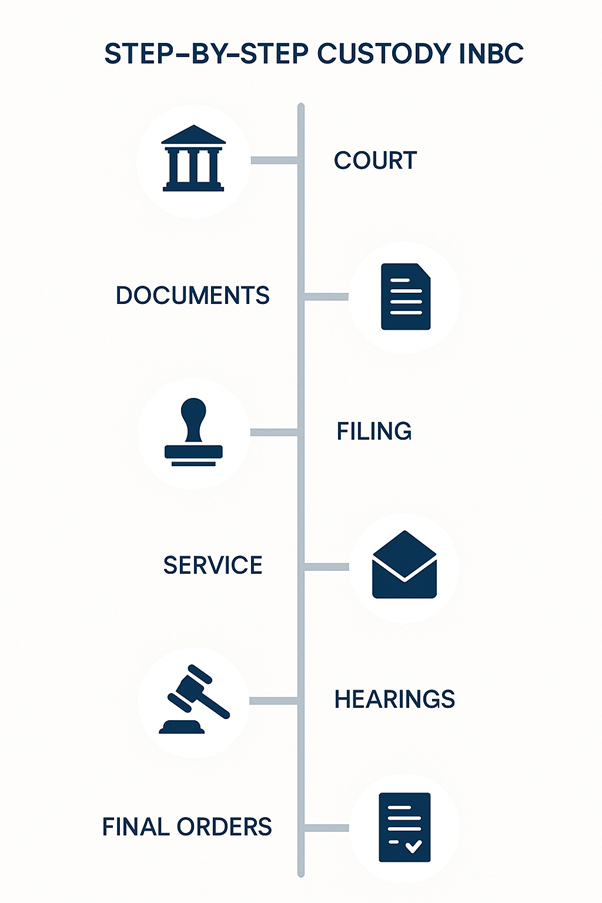
The custody process involves several key steps:
1. Choose the Right Court
- Provincial Court of BC: Handles most parenting and custody disputes.
- Supreme Court of BC: Handles custody issues tied to divorce or property division.
2. Prepare the Necessary Documents
Common forms include:
- Notice of Family Claim (Form F3) for Supreme Court.
- Application for a Parenting Order (Form 35) for Provincial Court.
- Affidavits, parenting plans, and financial disclosures.
3. File the Application
Submit documents to the court registry and pay the applicable fees.
4. Serve the Other Parent
Legally deliver documents to the other parent or guardian. Service rules must be followed carefully.
5. Attend Court Hearings
Participate in conferences, mediation, or hearings. Settlement is encouraged before trial.
6. Receive Final Orders
The court issues a binding order based on the best interests of the child.
Documents Required for Custody Applications
When preparing your case, you may need:
- Child’s birth certificate.
- Parenting plan.
- Financial statements if child support is involved.
- Affidavits from parents or witnesses.
- Previous court orders if applicable.
Having complete documentation ensures your application is not rejected or delayed.
Common Mistakes to Avoid
Parents often make errors that hurt their custody applications:
- Submitting incomplete or incorrect forms.
- Failing to meet strict deadlines.
- Not disclosing income or assets.
- Attempting to file without understanding family law.
- Ignoring the “best interests of the child” standard.
These mistakes can be avoided with professional legal guidance.
How Long Does Custody Take in BC?
The timeline varies depending on whether parents agree or disagree:
- Uncontested cases: Agreements can be finalized in a few months.
- Contested cases: Disputes may extend the process to a year or more.
Factors such as documentation, cooperation, and court schedules can affect how quickly your case is resolved.
Why Work with a Vancouver Child Custody Lawyer?
While self-representation is possible, many parents benefit from professional help:
- Knowledge of BC Family Law Act ensures compliance.
- Correct paperwork reduces costly delays.
- Experienced advocacy presents your case effectively.
- Emotional support helps you stay focused on your child.

At ULegal Services, we focus on transparency, compassion, and empowerment, giving parents confidence during difficult times.
Book your consultation today with a trusted Vancouver child custody lawyer and protect your child’s future.
Conclusion: Take the Right Steps for Your Child’s Future
Filing for child custody in BC requires preparation, patience, and understanding of legal rules. By following the correct steps, preparing complete documents, and focusing on the child’s best interests, parents can improve their chances of success.
Most importantly, you do not need to navigate this process alone. An experienced Vancouver child custody lawyer can guide you, protect your rights, and ensure your child’s well-being remains the priority.
Contact U Legal Services today to schedule a consultation and take the first step toward securing your child’s future.

FAQs About Filing for Child Custody in British Columbia
How much does it cost to file for child custody in BC?
The cost depends on court filing fees and legal representation, but hiring a lawyer ensures your application is correct and enforceable.
How long does the custody process take in British Columbia?
Timelines vary from a few months in uncontested cases to over a year in complex disputes, depending on court schedules and cooperation.
Do I need a lawyer to file for child custody in BC?
While not legally required, a lawyer increases your chances of success by preparing strong documents and presenting your case effectively.
What factors do BC courts consider in custody cases?
Courts look at the child’s best interests, including safety, stability, emotional well-being, and their relationship with each parent.
Can custody orders be changed after they are granted?
Yes, custody orders can be modified if there is a major change in circumstances such as relocation, finances, or the child’s needs.
What happens if I don’t serve the other parent correctly?
Failure to serve documents properly may result in delays or dismissal, so it’s important to follow BC’s legal service rules carefully.
What documents are required for filing custody in BC?
You typically need your child’s birth certificate, financial records, affidavits, and any past orders related to parenting or custody.