

How Do You File for Legal Separation?
Filing for legal separation means submitting a petition to the court, serving your spouse, and finalizing an agreement that covers finances, custody, and property. While the process is similar to divorce, the difference is that you remain legally married but live separate lives. Many couples choose this path for financial, personal, or religious reasons, but the process isn’t always simple. Let’s walk through how to do it, the problems you may face, and when expert legal advice can help.
What Does Legal Separation Actually Mean?
Legal separation is a formal court-recognized arrangement where married couples live apart but remain legally married.
Unlike an informal separation, which is just a private decision, legal separation is binding. It outlines responsibilities for finances, child custody, debts, and property similar to divorce orders. However, because the marriage is still legally intact, neither spouse can remarry.
Many couples choose legal separation when divorce is against their religious or cultural values. Others prefer it because they can keep access to spousal health insurance or tax benefits. It’s essentially a middle ground providing legal clarity without dissolving the marriage.
How Do You Prepare Before Filing for Legal Separation?

Preparation is critical because mistakes early on can cause delays or unfair agreements.
- Assess your situation carefully. Before filing, ask yourself if legal separation fits your needs better than divorce. Couples who want a trial period apart or wish to protect financial benefits often choose this option.
- Talk with your spouse. Open communication helps reduce conflict. If both parties agree, the process is smoother and cheaper. Lack of communication usually results in long court battles.
- Gather financial and personal records. Collect bank statements, mortgage details, tax returns, insurance information, and debt records. Courts require a complete financial picture to divide obligations fairly.
- Consider mediation. An experienced mediator can help couples draft agreements before filing, saving time and reducing hostility. Mediation is especially helpful when children are involved.
Expert tip: Even if things seem friendly, put every agreement in writing. Courts rely on documents, not verbal promises.
What Are the Steps to File for Legal Separation?
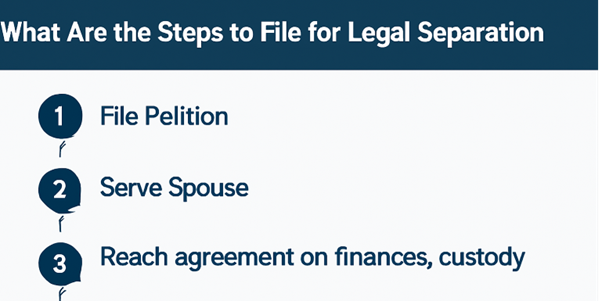
The process differs slightly depending on your state, but the general steps are consistent.
- Check residency requirements. Most states require at least one spouse to live in the state for a certain period before filing. For example, California requires six months of residency.
- Prepare and file the petition. The petition is a formal legal document outlining why you seek separation and what you request regarding custody, finances, and property. This is submitted to the local family court.
- Serve the papers to your spouse. Legal service means delivering documents through an official process server or sheriff. Informal delivery is usually not allowed.
- Wait for a response. Your spouse must respond, either agreeing, disagreeing, or submitting a counter-petition. If uncontested, the process moves faster. If contested, expect more hearings.
- Negotiate or mediate disputes. Courts encourage couples to settle disagreements through mediation before going to trial. This reduces costs and emotional stress.
- Attend hearings if required. If you and your spouse cannot agree, a judge may schedule hearings to decide issues like custody, support, or asset division.
Receive the final order. Once all matters are resolved, the court issues a legal separation decree. This document makes the separation official and enforceable.
Example: In New York, the process takes a few months if uncontested but can extend over a year if disputes drag on.
What Problems Can You Face During Filing?

Legal separation is rarely straightforward. Couples often face emotional, financial, and logistical challenges during the process.
- Financial disagreements can delay the process. Many couples argue over who pays debts, spousal support, or shared expenses. Without clear records, disputes grow more complicated.
- Custody conflicts are highly stressful. Parents may disagree about where children should live, visitation schedules, or schooling decisions. These conflicts often extend the timeline significantly.
- Court delays are common. Family courts handle heavy caseloads, and contested separations can take months or even years to resolve.
- Legal costs add up quickly. Filing fees, attorney costs, and expert witness fees can strain finances, especially if disputes are lengthy.
- Emotional stress is underestimated. Living separately under legal terms while remaining married creates confusion. Some spouses even live under one roof while separated, which complicates daily life.
Expert advice: If emotions run high, consider therapy or counseling alongside legal action. Emotional readiness is just as important as legal preparation.
How Much Does Legal Separation Cost and How Long Does It Take?
The cost and timeline depend on whether the case is contested or uncontested.
- Filing fees usually range between $100 and $400, depending on the state. These must be paid when submitting the petition.
- Attorney fees vary widely. Some charge flat rates for uncontested cases, while others bill hourly. On average, expect anywhere between $1,000 to $5,000 if disputes arise.
- Additional costs may include mediation services, financial advisors, or custody evaluations. These can add several thousand dollars to the total.
- Timeline: An uncontested separation may finalize within 3–6 months. Contested cases, especially with custody or property disputes, may take a year or longer.
Example: In California, filing fees are around $435, and the average uncontested case takes six months. Contested cases can stretch into years, depending on court backlogs.
Is Legal Separation Better Than Divorce?
This depends on your goals, values, and financial circumstances.
- Legal separation may be better if:
- You need to maintain spousal health insurance coverage. For example, one spouse may rely on the other’s employer-based plan.
- You want a trial period apart before making a final decision about divorce
- Divorce may be better if:
- You plan to remarry in the future, as legal separation does not dissolve the marriage.
- The relationship is irreparably broken and reconciliation is not possible.
Expert advice: Speak with both a lawyer and a financial planner before deciding. The right choice depends on your legal, emotional, and financial priorities.
When Should You Absolutely Seek Legal Advice?
While some couples manage separation without attorneys, there are times when professional help is essential.
- If children are involved. Custody, visitation, and child support are often the most complicated and emotionally charged issues. A lawyer ensures fair and enforceable arrangements.
- If property division is disputed. Real estate, retirement accounts, and business ownership make separation agreements complex. Legal advice helps protect your assets.
- If your spouse hides assets. Some spouses attempt to conceal income or property. Lawyers can use discovery tools to uncover hidden assets.
- If domestic violence or abuse exists. Safety is the top priority. A lawyer can help secure protective orders alongside the separation process.
- If modifying an existing separation agreement. Life changes, such as job loss or relocation, may require adjustments to the original order. Legal guidance helps prevent mistakes.
Expert tip: Even in uncontested cases, a brief consultation with a lawyer ensures your documents are valid and enforceable.
Conclusion
Filing for legal separation requires petitioning the court, serving your spouse, and negotiating agreements on custody, property, and finances. While the process can seem straightforward, problems like disputes, costs, and emotional strain often complicate matters.
If you’re considering this step, weigh the pros and cons of separation versus divorce, prepare thoroughly, and seek professional guidance. Legal advice ensures your rights are protected and your separation agreement is enforceable, helping you move forward with clarity and stability.
Frequently Asked Questions FAQs:
What is legal separation, and how does it differ from divorce?
Legal separation is a formal court process where married couples live separately but remain legally married. Unlike divorce, it does not dissolve the marriage.
What are the main steps involved in filing for legal separation?
Key steps include checking residency requirements, filing a petition, serving your spouse, negotiating agreements, and attending court hearings if necessary.
How do you prepare before filing for legal separation?
Preparing involves gathering financial and personal records, communicating with your spouse, and considering mediation or professional legal advice.
What problems can you face during the legal separation process?
Emotional, financial, and logistical challenges such as disputes over property, custody, and support can complicate the process.
How much does filing for legal separation cost, and how long does it take?
Costs range from filing fees ($100-$400) to attorney fees ($1,000 to $5,000), and the process can take 3–6 months for uncontested cases or longer for contested ones.
Is legal separation better than divorce?
Legal separation may be preferable if you need to maintain spousal benefits or if divorce conflicts with your personal or religious beliefs. Divorce offers complete financial independence.
When should you seek legal advice during legal separation?
You should seek legal advice if children are involved, property disputes arise, your spouse hides assets, or if you need to modify an existing agreement.