
How to Create a Separation Agreement in BC?
Separation is one of the most difficult experiences families go through, both emotionally and legally. In British Columbia, couples who decide to end their relationship often face confusion about what separation means, how long it must last, and what goes into a proper separation agreement.
At ULEGAL Services, we often see clients feeling overwhelmed by the paperwork, deadlines, and decisions involved. This guide breaks down everything you need to know about creating a separation agreement in BC, step by step, so you can make informed choices and protect your rights.
What Does Separation Mean in BC?
In BC family law, separation happens when one or both partners decide to live apart with the intention of ending their relationship. You don’t need to file paperwork in court to be considered separated living “separately and apart” is enough.
What many people don’t realize is that you can be legally separated even if you still live in the same house. For example, you may stop sharing a bedroom, finances, and daily routines, but remain under one roof while working out practical arrangements.
Why a Separation Agreement Matters
A separation agreement is a legally binding document that sets out how you and your partner will handle important issues like:
- Parenting arrangements (custody, access, and parenting time)
- Child support and spousal support
- Division of property and debts
- Living arrangements
- Future dispute resolution
Without a written agreement, disputes can drag on and create financial and emotional stress. Having a properly drafted agreement ensures clarity, protects both parties’ rights, and can be enforced in court if necessary.
The One-Year Separation Rule Before Divorce
In British Columbia, you must be separated for at least one year before you can apply for a divorce (unless there’s proof of cruelty or adultery). This one-year separation period is a key part of the legal process.
During this time, most couples negotiate and finalize their separation agreement. That way, when the year is over, the divorce process itself is smoother, faster, and less stressful.
Key Issues to Address in a Separation Agreement
A separation agreement should cover the following major areas:
1. Parenting and Custody
The best interests of the child always come first. Your agreement should outline:
- Who the child lives with (primary residence).
- Parenting time schedules (weekdays, weekends, holidays).
- Decision-making responsibilities (schooling, medical, religious upbringing).
2. Child Support
Under the Federal Child Support Guidelines, child support is based on the paying parent’s income and number of children. Agreements should also include special or extraordinary expenses, such as medical costs, tutoring, or extracurricular activities.
3. Spousal Support
Not every separation involves spousal support, but where it applies, it’s important to specify:
- Amount of support
- Frequency of payment
- Duration
4. Division of Property and Debt
BC follows the Family Law Act, which generally splits family property and debts 50/50, unless an equal division would be unfair. Family property includes:
- Homes, vehicles, and investments acquired during the relationship
- Pensions and RRSPs
- Business interests
Excluded property (such as inheritances or gifts) may not be divided but could increase in value during the relationship, which is still shareable.
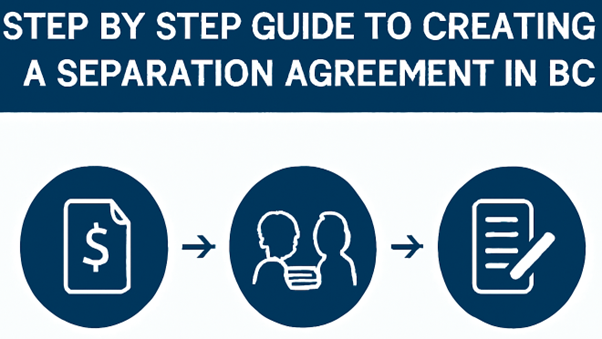
Step-by-Step Guide to Creating a Separation Agreement in BC
Step 1: Gather Financial and Legal Information
Full financial disclosure is crucial. This means collecting:
- Pay stubs, tax returns, and business income records
- Bank statements, investment accounts, and pension details
- Mortgage or rental agreements
- Loan and credit card statements
Transparency avoids disputes later and ensures fairness.
Step 2: Decide on Key Issues
Sit down (often with a mediator or lawyer present) and discuss:
- Parenting arrangements
- Division of assets and debts
- Support obligations
Step 3: Mediation or Negotiation
Many couples in BC choose mediation to reach an agreement without going to court. A neutral mediator helps both parties find common ground and reduce conflict.
Step 4: Draft the Agreement
Once decisions are made, a lawyer drafts the separation agreement. This ensures it complies with the Family Law Act and other BC regulations.
Step 5: Independent Legal Advice (ILA)
Both partners should seek independent legal advice before signing. This step protects against claims that one party didn’t understand their rights or felt pressured.
Step 6: Sign and Formalize
The agreement must be signed and witnessed. Once complete, it becomes legally binding and enforceable in BC courts.
Common Mistakes to Avoid
- Incomplete Financial Disclosure: Not revealing assets or debts can invalidate the agreement.
- Overlooking Future Expenses: Failing to account for children’s education or healthcare needs can cause disputes later.
- DIY Templates Without Legal Review: Online forms may miss BC-specific legal requirements.
- Not Updating the Agreement: If circumstances change (job loss, new partner, relocation), agreements should be revisited.
Why Professional Guidance Matters

Separation is one of the most significant turning points in life. While some couples may try to manage on their own, mistakes can have long-term financial and emotional consequences. Things can be even smother if you had a separation agreement. An experienced BC family lawyer ensures your agreement is:
- Legally enforceable
- Fair and balanced
- Tailored to your unique situation
- Structured to minimize future disputes
At ULEGAL Services, we provide compassionate, practical support throughout the separation process. From helping you understand your rights to drafting a strong agreement, we ensure you feel confident in every step.
Final Thoughts
Separation in BC doesn’t have to mean endless conflict or confusion. By understanding the one-year separation rule, addressing key issues in a clear separation agreement, and seeking proper legal advice, you can move forward with peace of mind.
If you’re facing separation, don’t navigate it alone. Contact ULEGAL Services today for guidance on creating a separation agreement that protects you, your family, and your future.
Frequently Asked Questions
What is a separation agreement in BC?
A separation agreement in BC is a legally binding document that outlines how couples will divide property, handle parenting, child support, and spousal support after separating. It ensures clarity, protects rights, and can be enforced in court under the BC Family Law Act.
How long do you need to be separated before divorce in BC?
In British Columbia, you must be separated for at least one year before applying for divorce, unless there is proven cruelty or adultery. Many couples use this period to negotiate and finalize a separation agreement, making the divorce process smoother.
Can you be separated and still live together in BC?
Yes. In BC, separation is about intention, not just location. Couples can live “separately and apart” in the same home if they stop sharing finances, bedrooms, and routines while making arrangements for their separation.
What should a separation agreement include in BC?
A BC separation agreement should cover child custody, parenting schedules, child support, spousal support, division of property and debts, and dispute resolution. Including these details ensures the agreement is comprehensive and enforceable.
Is a separation agreement legally binding in BC?
Yes. Once properly drafted, signed, and witnessed, a separation agreement in BC is legally binding and enforceable in court. Without legal review, however, poorly written agreements may be challenged or set aside.
What happens if my circumstances change after signing a separation agreement in BC?
If major life changes occur, such as job loss, income change, or relocation, your separation agreement can be updated. A family lawyer can help amend the agreement to reflect new circumstances and ensure it remains fair and enforceable.
Do I need a lawyer for child custody in BC?
While not legally required, a family lawyer helps ensure your rights are protected, agreements are enforceable, and your child’s wellbeing is prioritized.